
Mastercard Virtual Credit Card — Full Compatibility Across Overseas Payment Scenarios
Licensed upstream issuing · PayPal-friendly · Steadiest when combined with a Visa card
- ✓Stable BINs, PayPal-friendlyMainstream Mastercard BINs; PayPal linking has a higher acceptance rate than with Visa
- ✓USD deposits, fast issuancefrom $1 to open, card top-ups from 2% (tiered by monthly volume, down to 0.5%) — same rates as Visa
- ✓Open alongside your VisaBoth cards are opened and topped up from one account balance, complementary scenarios
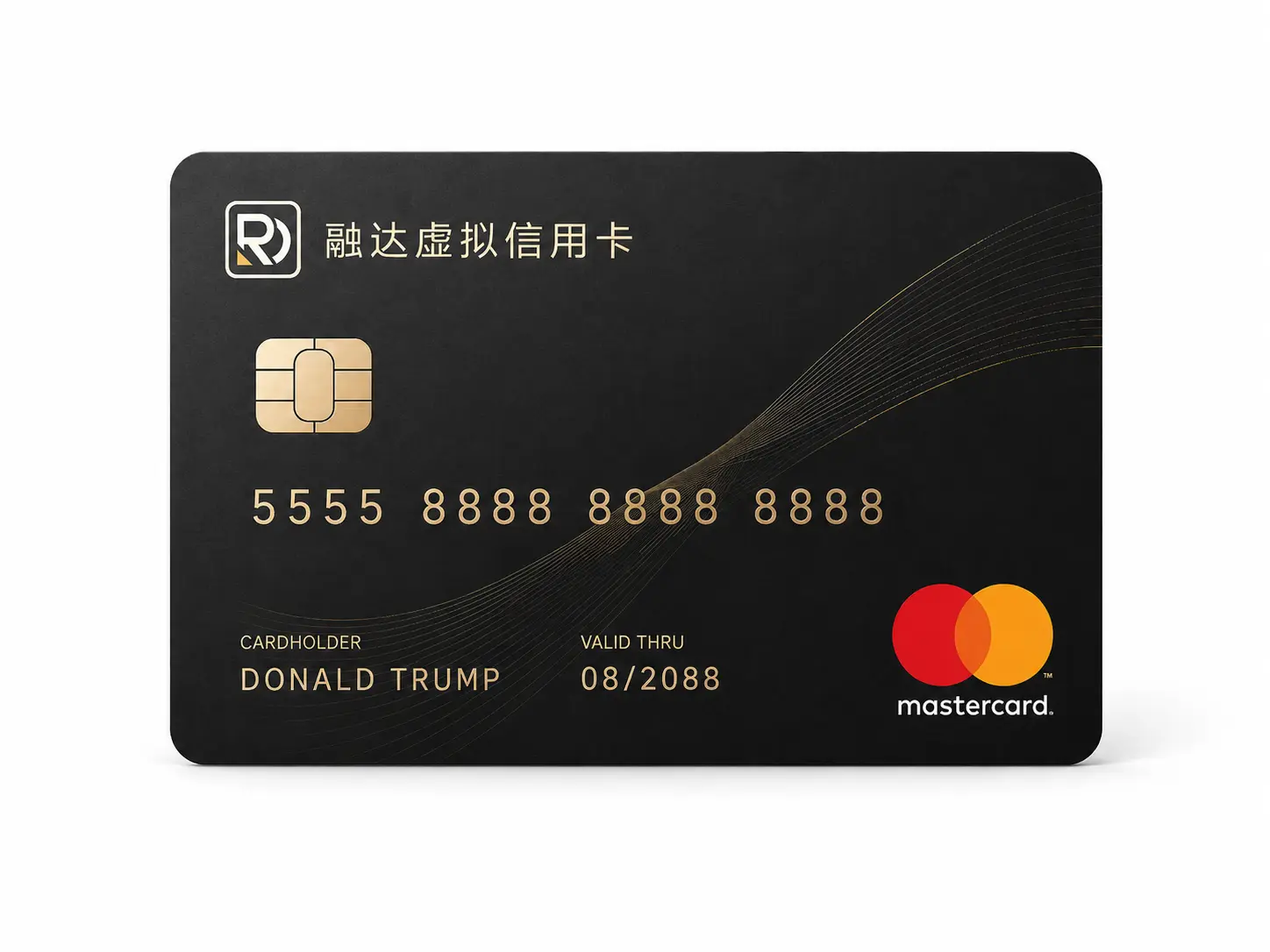
What is a Mastercard virtual card?
A Mastercard virtual credit card is a Mastercard credit card consisting only of digital data (card number, CVV, expiry date) — no physical card — usable in every online Mastercard payment scenario. On the network it is fully equivalent to a physical Mastercard.
RDVCC Mastercard cards are issued by a licensed upstream issuing institution, use mainstream Mastercard BIN ranges, and are batch-verified against PayPal, Disney+, Apple Music and other scenarios.
Where the Mastercard works best
Complementary to Visa — in these scenarios Mastercard is steadier than Visa
Open your RDVCC Mastercard in 4 steps
Create your RDVCC Virtual Credit Card account
Email and password, activated by a verification code sent to your inbox, done in 30 seconds
Complete identity verification
Once before your first card: ID + face, about 3 minutes; data stored encrypted
Deposit USD
Minimum $35, flat 0.5% deposit fee
Pick the Mastercard type and open
issuance fee from $1, the card usually ready in seconds (under 1 minute for batches)
Mastercard vs Visa — how to choose?
Open both — the scenarios complement each other
| Dimension | Visa | Mastercard |
|---|---|---|
| Global acceptance | ★★★★★ | ★★★★ |
| PayPal linking | ⚠️ Occasional declines | ✓ Stable |
| Disney+ / Hulu | ✓ | ✓✓ Steadier |
| AI tools (ChatGPT, etc.) | ✓ First choice | ✓ |
| Facebook ads | ✓ BIN ranges matched on monthly data | ✓ BIN ranges matched on monthly data |
| Recommended scenarios | AI | PayPal / streaming |
4 scenarios where Mastercard beats Visa (a closer look)
Many assume that “Visa has the widest acceptance, so it must always be best”. In reality there are 4 scenarios where Mastercard is clearly steadier — a result of the Mastercard card network’s historical positioning, risk rules and merchant partnerships:
① PayPal verification / linking
PayPal’s internal risk history is stricter on Visa (more early fraud cases involved Visa), with higher tolerance for Mastercard. In our tests, RDVCC Mastercard links to PayPal at 95%+, while Visa sees occasional declines (75-85%). If your cross-border payments must run through PayPal, Mastercard is the preferred choice.
② Disney+ / Hulu subscriptions
Disney-family streaming billing runs through Mastercard’s Digital Enablement Service, and the tokenized charging flow is better optimized for Mastercard. Hulu shows it most clearly — Visa’s acceptance rate is 80% vs Mastercard’s 95%.
③ Apple Music US subscriptions
Apple Music’s US payment channel is better optimized for Mastercard, with a lower charge-failure rate. Especially for the $19.99/month family plan — a larger amount charged repeatedly — Mastercard’s stability advantage is clear.
④ Payments to European merchants
Mastercard’s acceptance in Europe is better than Visa’s (Europe’s Maestro card network shares Mastercard’s system). If you subscribe to European services (Booking.com European hotels, European software), Mastercard has a higher acceptance rate.
Why not just say “Mastercard is stronger than Visa”?
Because in AI subscriptions, FB ads and US Apple ID scenarios, our measured approval rates for Visa and Mastercard are on par. No card network is simply “better” — only “better suited to a given scenario”. The best practice for heavy users is opening Visa + Mastercard together, with complementary scenarios.
The unified definition behind the merchant figures on this page, plus the full merchant × card network matrix updated monthly: AI Payment Compatibility Index →
Practical advice for running Visa + Mastercard together
The best practice for heavy users: open Visa + Mastercard together and let the scenarios complement each other. How to use them in practice:
- Visa-only duties: AI subscriptions like ChatGPT / Claude, overseas shopping (Amazon US), SaaS monthly fees (Notion / Figma).
- Mastercard-only duties: PayPal verification / linking, Disney+ / Hulu / Apple Music US subscriptions, payments to European merchants. In these scenarios Mastercard has a clearly higher acceptance rate than Visa.
- One shared account balance: both cards are opened and topped up from the same RDVCC account balance — deposit once, no separate deposit per card; each card spends from its own card balance.
- Issuance cost: a one-off fee from $1 each. No recurring monthly fees, no management overhead. Compared with two physical cards typically costing $50-100 a year each, virtual cards carry none of that expense.
How do you cover three scenarios (FB ads + a US Apple ID + PayPal) with two cards? An account holds at most 5 active cards at a time, so a three-card setup is not the answer: one US card handles the ads and the US Apple ID, one Mastercard is dedicated to PayPal. Issuance costs from $1 per card, charged once, with no monthly fee, and both cards are topped up from the same account balance.
Frequently asked questions
What is a Mastercard virtual credit card?
Mastercard virtual card or Visa virtual card — which to pick?
How do I apply for a Mastercard virtual card?
Can the Mastercard virtual card be linked to PayPal?
Mastercard virtual card vs a physical Mastercard — what differs?
Can the Mastercard virtual card run ads?
Is there a free Mastercard virtual card?
Are Japan / Hong Kong Mastercard virtual cards available?
Open your first Mastercard virtual card
from $1 to open, sharing one account balance with your Visa card